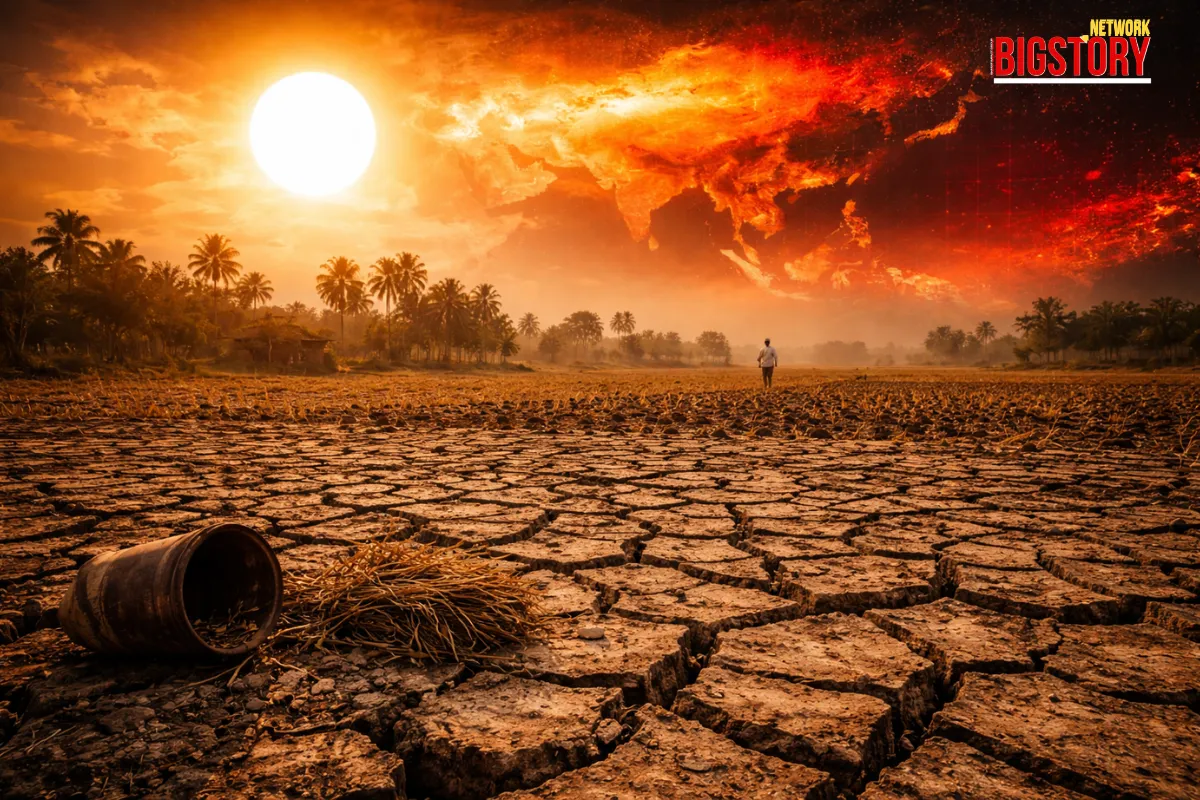
As global climate agencies warn of an exceptionally powerful El Niño developing by August, India faces a dangerous agricultural countdown that hinges entirely on the unpredictable Indian Ocean Dipole.
 Brajesh Mishra
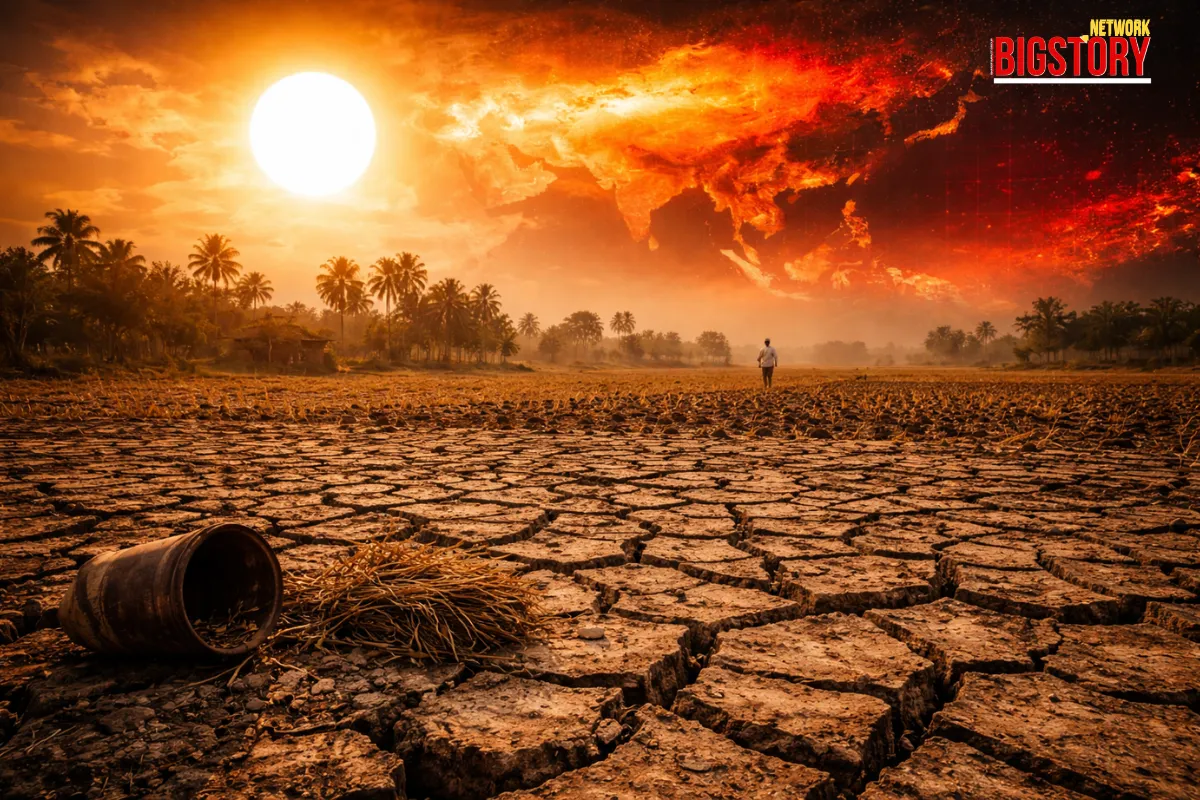
What happened: Climate models predict an 80% chance of a strong El Niño developing by August 2026, with a 22% chance it reaches the extreme "Godzilla" tier.
Why it happened: Pacific Ocean surface temperatures are rising sharply as the recent La Niña phase fades, pushing the global climate system into a massive warming pattern.
The strategic play: Global weather agencies are issuing urgent early warnings so governments can prepare for devastating climate shifts, including severe droughts in Asia and massive floods in the Americas.
India's stake: The phenomenon is expected to hit precisely during the second half of the Indian summer monsoon, threatening to depress rainfall and trigger a severe food inflation crisis.
The deciding question: Will a favorable Indian Ocean Dipole (IOD) develop in time to counteract the El Niño, or will India face an agricultural drought followed by unprecedented heatwaves in 2027?
The countdown to a massive meteorological disruption has officially begun. In mid-March 2026, global climate agencies—including the WMO and NOAA—issued urgent warnings that a rapidly developing, exceptionally strong weather pattern dubbed a "Godzilla El Niño" is highly likely to form by late summer. This extreme warming of the Pacific Ocean threatens to drastically disrupt global weather and trigger record-breaking heat.
For India, this isn't just an abstract climate anomaly; it is a direct threat to the country's macroeconomic stability. With the phenomenon projected to collide directly with the second half of the Indian summer monsoon, the nation's fragile agricultural sector is staring down the barrel of severe rainfall deficits and the looming threat of massive food inflation.
Celeste Saulo, Secretary-General, World Meteorological Organization (WMO) Saulo issued the global alert regarding the fading La Niña, emphasizing the urgent need for early governmental planning to avert mass economic losses. She noted that the most recent major El Niño in 2023-24 played a critical role in the record global temperatures seen in 2024.
Dr. M.N. Rajeevan, Former Secretary, Ministry of Earth Sciences (MoES) Dr. Rajeevan explicitly warned the Indian government to begin preparations now. Drawing on historical data showing the strong link between El Niño and depressed monsoon rainfall, he has publicly cautioned against the harsh droughts and subsequent heatwaves likely to hit the subcontinent.
India Meteorological Department (IMD) The national meteorological agency is closely monitoring the volatile "spring predictability barrier." Their primary focus is tracking the potential development of a positive Indian Ocean Dipole (IOD), which serves as India's only natural defense mechanism to offset El Niño's drought effects.
Global outlets are understandably fixated on the catastrophic flooding risks in California, the suppression of the Atlantic hurricane season, and the likelihood of 2027 shattering global temperature records. However, this Western-centric focus ignores the ticking timebomb over the Indian subcontinent: the "Positive IOD" gamble.
India's immediate crisis hinges entirely on whether a positive Indian Ocean Dipole (IOD)—a difference in sea surface temperatures between the western and eastern Indian Ocean—will form to counteract the Godzilla El Niño. Banking on the IOD is a massive and highly dangerous meteorological gamble, as its forecasts are notoriously unreliable compared to Pacific ENSO models. History is unforgiving: 9 out of 14 El Niño years since 1980 have resulted in deficient monsoons across India. If the IOD fails to materialize this summer, the second half of India's monsoon will inevitably collapse, devastating kharif crop yields just as the nation grapples with broader geopolitical and economic pressures.
If India’s entire rural economy relies on the hope of an unpredictable Indian Ocean Dipole to fight off a Godzilla El Niño, are we treating agriculture like a science, or a casino?
News & Wire Coverage:
Official Statements & Data:
 Exclusive Content






Sign up for the Daily newsletter to get your biggest stories, handpicked for you each day.

 Trending Now! in last 24hrs